12 Beautiful Squarespace Online Store Examples for Creatives and Makers (2026)

Have you been searching for inspiring Squarespace online store examples to help you design a thoughtful, beautiful shop for your products? Maybe your current shop feels generic, or cobbled together. Maybe you haven't launched yet because you can't quite picture what “right” looks like for you.
In this article, I have gathered some of the most thoughtfully designed Squarespace ecommerce examples created by creatives, makers, and small product brands who value craftsmanship and intentional design. You’ll find inspiring examples that showcase products beautifully, along with ideas for creating an online store that reflects your brand and supports a calm, ethical and sustainable approach to ecommerce.
Whether you're redesigning an existing site or starting from scratch, I hope these examples give you a clearer sense of what's possible.
Table of Contents
12 Best Squarespace Online Store Examples for Creatives (2026)

Leandra Moon
The Leandra website design is specifically tailored for creatives, artists and small product-based businesses that have a curated product range or bespoke offerings. Its editorial style layouts and image-first structure leave ample space to showcase your products as well as for storytelling, which is such an important aspect for artisanal businesses to establish trust and connection with potential buyers. The minimal navigation and well-thought out product page is designed to help gently guide your customers across the site. Created to be adaptable, it is perfect as both an online shop and a beautiful digital catalogue, highlighting your handcrafted work with elegance and ease.

Dust + Form
This minimal site is cleverly using Squarespace’s native features to create a well filtered, functional collections overview page that makes it easy for customers to find the product they want and then seamlessly connects to the relevant product page. This is a great alternative way to display and sort your goods into different subcategories and gives more flexibility in terms of creative layouts. This site also makes excellent use of the waitlist feature (a simple yet powerful way to keep your customer excited and informed) and the additional information sections on the product page to visually display different finish options.

Sundance Studio
The pared-back homepage of this weaver’s Squarespace ecommerce example, with its layout reminiscent of print media, immediately draws you into the world of the artisan and her practice. It is so important for makers to create that deeper connection with their website visitor, to tie the objects they make to the human who makes them and this site does it so well. The same strong design follows through on the shop page which is kept uncomplicated and lets the incredible pieces shine. The separate page for the artist’s sliding panel work is a terrific example of how artisans can use their websites to highlight specific pieces or collections.

AAKS
AAKS is stunning proof of the power of high quality photography and that it is absolutely possible to build a design-forward, premium online store on Squarespace. The imagery is the star here, with restraint fonts and layouts that let the handmade woven bags speak for themselves. The quality of the visuals is also evident in the exemplary, clean product photography that makes shopping an almost tactile experience, an important point when selling a physical product in the digital realm, especially for more niche, luxe items. Another aspect worth pointing out is AAAKS sustainability page that clearly lays out the brand’s principles and builds that human connection as well as credibility.

Jin Lee Squarespace online store example
This chic, editorial site shows that Squarespace can be a great choice for made–to-order brands. A thoughtfully placed core principles section on the homepage highlights the “why” behind Jin Lee’s approach to making clothes. Potential customer hesitations around the made-to-order model are addressed through easy to find FAQs, an order timeline page and sizing, materials and care guides. The product page is laid out to include all the important information, essentially holding the customer’s hand through the buying decision process, something that is so essential in a made-to-order business, where timelines are less immediate and shoppers often need more reassurance and clarity before investing.

Hattie Zampa
The best Squarespace store examples are able to adapt to a brand's changing needs and handle selling beyond just an online store. Hattie Zampa’s site is a beautiful example of an artist who is covering different sales channels and handles them seamlessly through well-thought out page architecture. Customers can browse her prints and originals in the e-commerce shop, access information about offline retailers, or submit a wholesale inquiry or sign-up for trade membership. So even if your artisan business has more complex needs, Squarespace is well equipped to handle it.
Yan-Yak
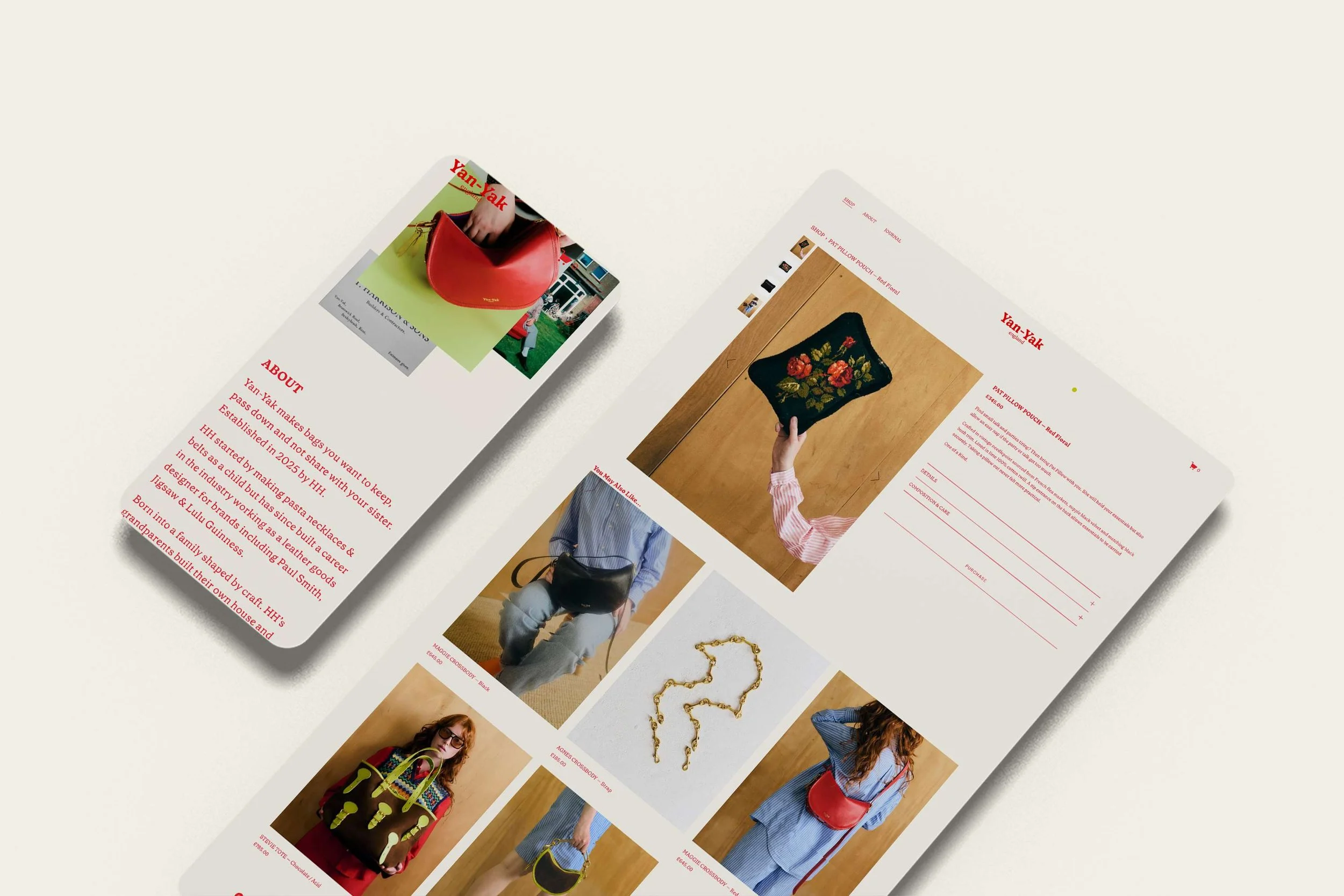
Sometimes, and especially if you are a single or small product catalogue business, a more streamlined site that focuses primarily on the shop side of things, while still creating a strong brand presence, is all that is needed. Yan Yak’s compact website has all the vital pieces to make shopping for their bags easy: simple navigation, clear product pages, an uncomplicated yet evocative About page and informative supporting pages like a materials & care guide and clear T&Cs. It further demonstrates that your branding can be simple too, and still bring your products and story to life. Another benefit of keeping your ecommerce site lean is that it is much easier to manage and maintain, reducing tech overwhelm and ultimately helping you run a calmer business.

TINK
A polished Squarespace store example that shows once again that the platform need not be basic and can work for high-end products and brands. When selling luxury items online, images, branding, words and design truly need to convey the elevated quality and special nature of the product and build trust in the ordering and shopping process - all brilliantly executed on the TINK website. The great use of a coded mega-menu with on-brand visual touches and the thorough, clear custom orders information, broken down via several stand alone pages, not only nurture confidence in the brand but also draw you deeper into its story and the unique craftsmanship of their jewellery.
Contour Boxes
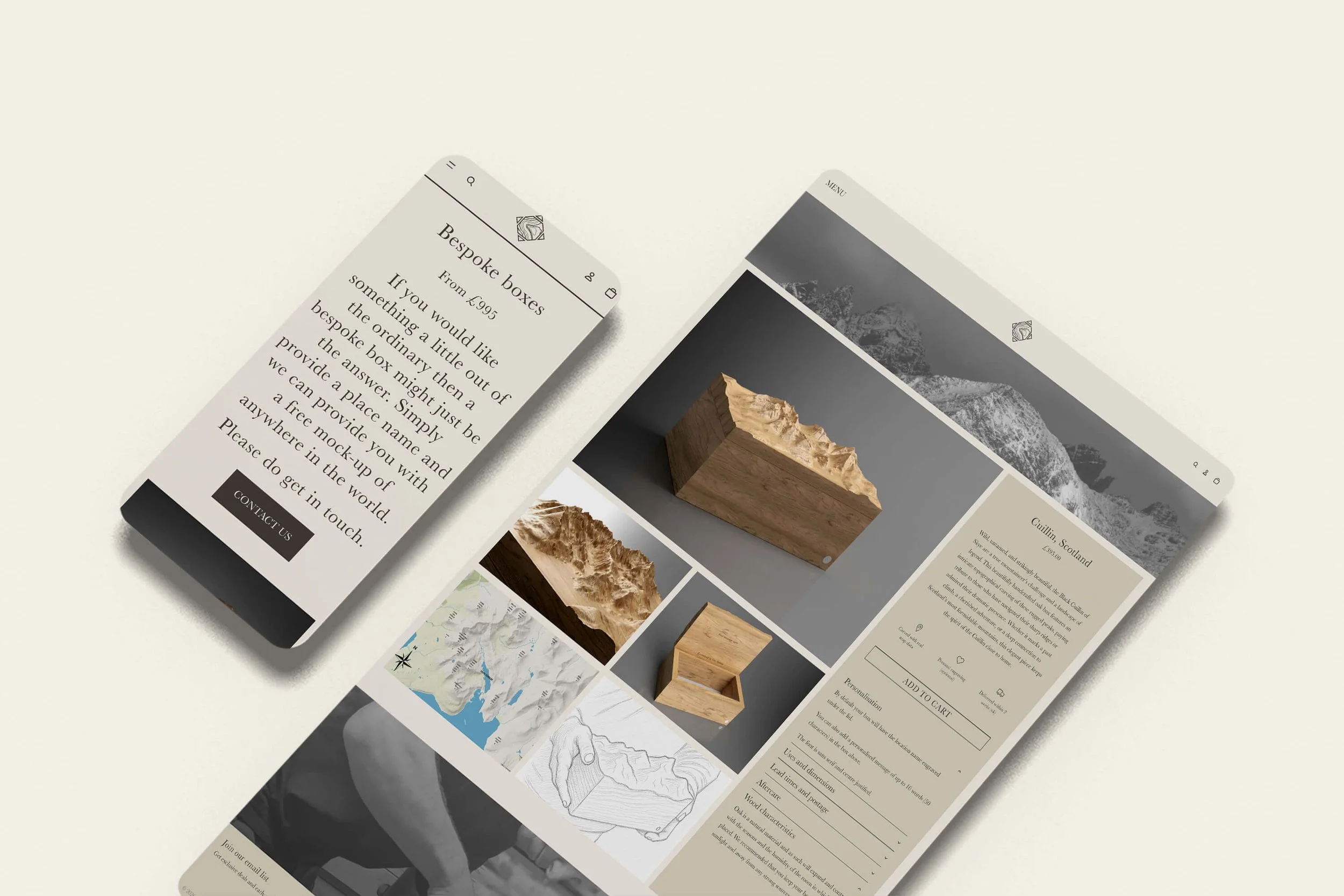
This is a brilliant representation of an online store for a highly specialised item that also offers personalisation and a bespoke option. The product pages for the intricately carved wooden boxes make excellent use of the accordion block to condense vital information for a clean, calm browsing experience. And the personalisation step is neatly solved through an in-built pop-up form that easily lets customers add that personal touch to the product. If you are a maker who offers customisations, let this lovely site inspire you to keep things simple, both for your customer and yourself.
Studio Bust
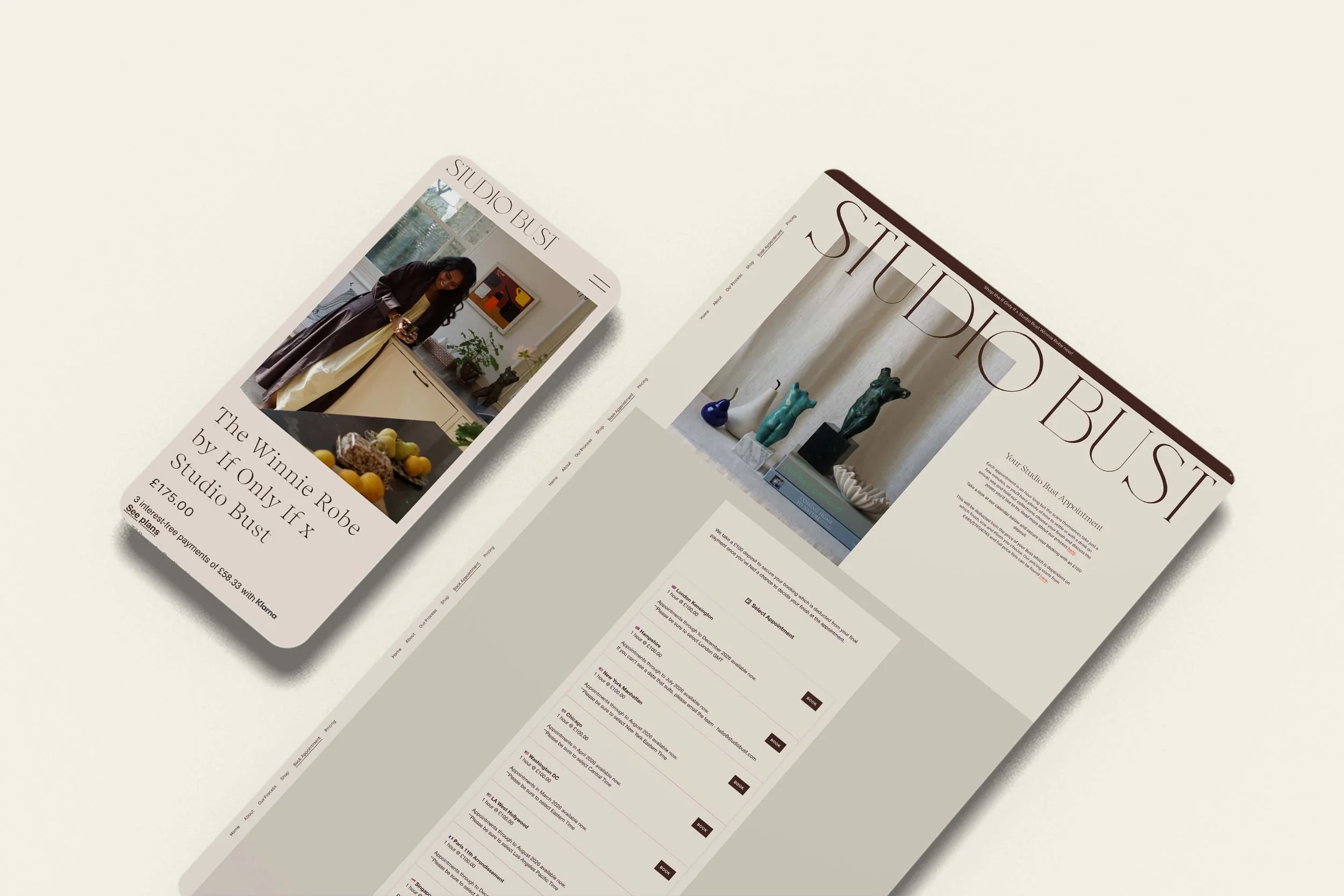
An elegant Squarespace online store example that combines the ecommerce of the platform with another of its practical native features: appointment booking. The customer can easily browse through the different collections and finishes of the personalised bust sculptures, read all about the process and pricing and, if they are ready to take the next step, can then directly book an appointment at their preferred location. Studio Bust’s main offering thus neatly ties in with their small merchandise online store. If your product-based business offers studio visits or a virtual consultation for bespoke products, for example, having the option to directly book via your website removes a major hurdle for customers and can really cut back on time spent in your inbox juggling dates (and isn’t less time in the inbox always a win?).
K Keramics
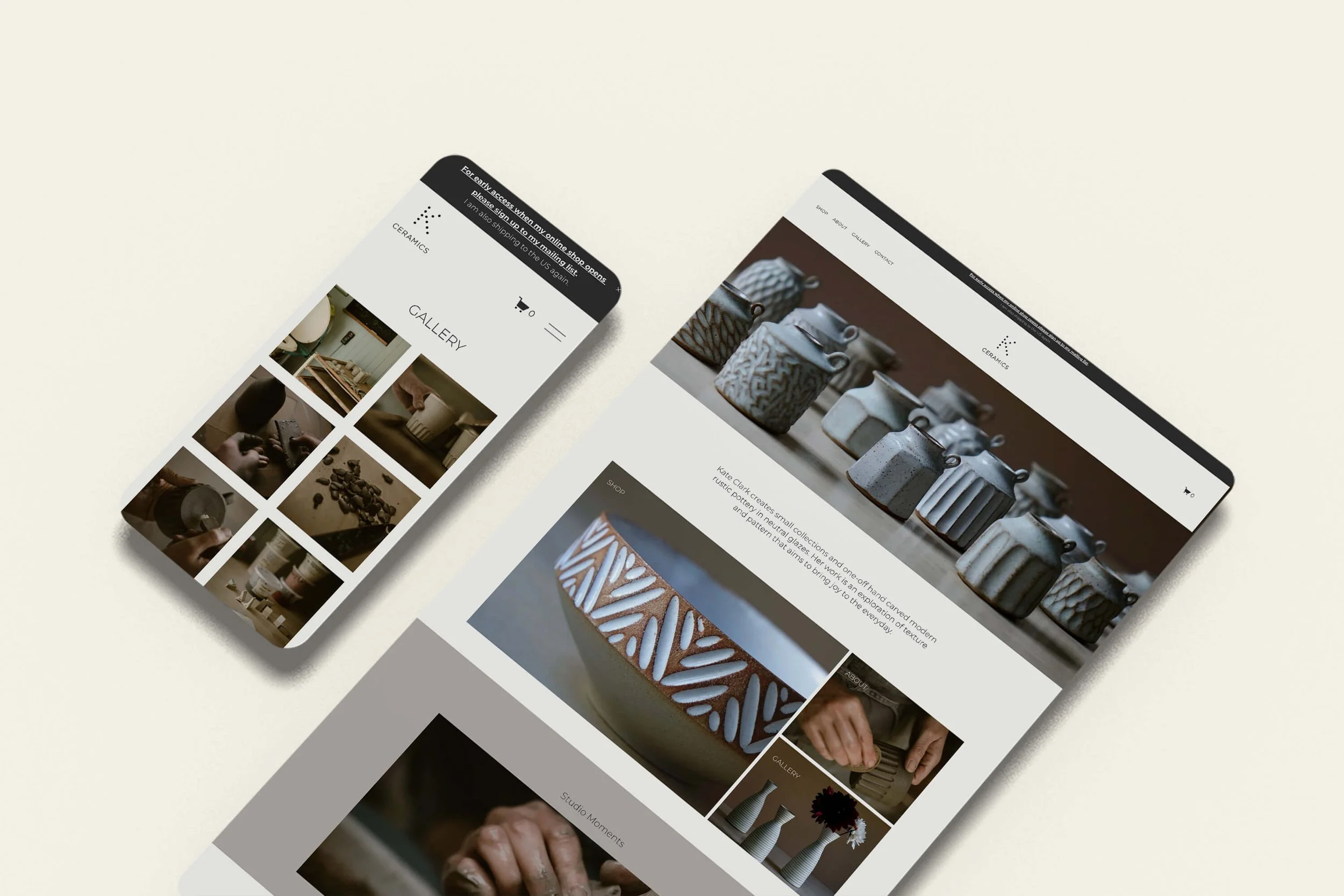
What a great use of video on the homepage to really draw customers into the creator's world and process! This site also demonstrates how to adapt your online store for your unique selling model. In this example, the shop “opens” based on product availability and also gives mailing list subscribers early access. This really helps nurture and build up a loyal customer base and can also help anticipate demand, which is extremely helpful for small, ethical product businesses. Sometimes a studio and its owner need to take a break and this is a great example of how your website can still quietly work for you in the background.
Memor
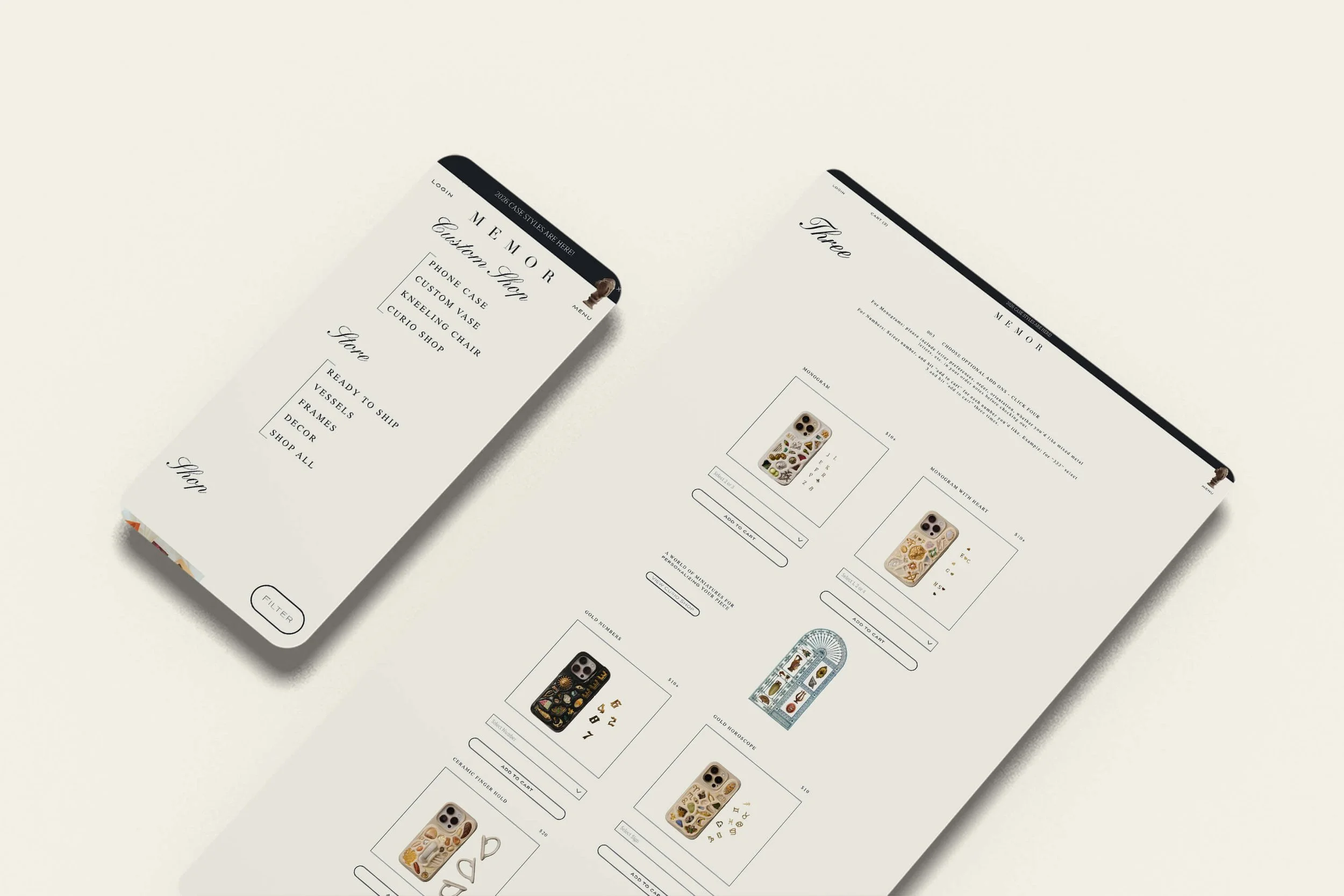
The overall design of this website is such a great reflection of the products it sells: unique, with touches of the artisanal and handmade and an understated elegance. And the bespoke aspect extends to the clever way the ordering process is set up for the one of a kind phone cases. A series of well planned pages breaks it down into digestible steps (such an important point in creating a calm online experience), guiding the customer step-by-step to their distinct product. This Squarespace store example illustrates the many creative ways the platform’s boundaries can be pushed and adapted to suit the needs of small product-based businesses and makers and their unique wares and selling models.
Ready for a website that reflects the care behind your work?
If these Squarespace shop examples have sparked ideas for your own shop, but you’re feeling overwhelmed about how to bring it all together, you don’t have to figure it out alone. My One-Week Ecommerce Website is designed specifically for makers and creative product brands who want a thoughtful, beautiful online store without the long timelines or technical stress. Together, we’ll create a calm, intentional website that showcases your products and feels true to your brand.
Frequently Asked Questions about Squarespace online stores
-
Yes, and I think it is particularly great for small product businesses, makers and creatives. It offers aesthetic design options, an easy to navigate interface and the all-in-one platform is incredibly flexible. Squarespace includes different levels of ecommerce functionality across its different price plans, allowing you to list products, manage inventory, process payments and configure shipping. In short, everything you need to start your online store.
-
They're different platforms built with different businesses in mind. Shopify is a dedicated ecommerce platform, built to handle large catalogues, complex inventory, multi-currency selling and advanced integrations. It's very powerful, but it comes with a steep learning curve, higher running costs and a level of technical complexity that can be too much for a small creative business.
Squarespace is an all-in-one website builder with strong ecommerce capability built in. It's more intuitive to manage, more affordable for small businesses, and — crucially for makers and design-forward brands — it gives equal weight to design and selling. For most of the small product-based businesses that appear in Squarespace ecommerce examples and roundups like this one, Squarespace is the better fit.
That said, if you have hundreds of products, need sophisticated tax automation or rely on third-party fulfilment integrations, Shopify may serve you better.
-
The short answer: start with your business goals and how you want your website to help you achieve them, then choose your platform. Getting clear on these foundational points will make it a lot easier to set up your online store the right way.
From there, the practical steps are: choose a platform (Squarespace is a solid choice for most small creative businesses), gather your branding assets, write your product descriptions and page copy, upload your photography, configure your shipping and payment settings, and test the full checkout experience before you go live. For a more in-depth look at the process you might like to read this helpful guide.
If you'd rather hand the build to someone else entirely, my one-week ecommerce website is designed for exactly this: a complete, beautifully designed Squarespace store, built and ready in one focused week.
-
Start by looking at Squarespace ecommerce templates through the lens of your business goals and your customer’s needs. It's also worth considering how much flexibility you need. Some templates are more locked in their structure than others. If you want to grow your shop over time, adding pages, collections and products without things falling apart, look for layouts with clean, duplicatable sections. To future-proof your website and business, it is also important to ensure that you choose a template that is built on Squarespace 7.1, their most up-to-date version.
If you just don’t know where to start and can’t figure out which template to choose, it might be worth reaching out to a Squarespace expert, like myself, and discuss your needs and requirements with a professional web designer.
-
There's no single right answer, because ultimately the best template is the one that fits your specific business goals and customer niche. That said, the best ecommerce sites for small businesses on Squarespace tend to share a few qualities regardless of which template they're built on: clean navigation, strong above-the-fold imagery and copy, clear customer-focused product pages, and a checkout flow with as little friction as possible.
If you're a maker with a curated range, you'll generally want a template that leads with visuals and keeps the structure simple. If you take commissions or sell a mix of ready-made and bespoke work, look for something flexible enough to accommodate both. My studio’s Leandra Moon template was built with an image-first aesthetic and is very adaptable to different product types and selling models.
-
Good examples of Squarespace ecommerce sites tend to share a few things in common: strong photography, calm and uncluttered navigation, and product pages that do more than list specs. They tell the story behind what's for sale.
You'll see this across very different kinds of small businesses, from a woven bag brand that lets premium photography do the talking, to a made-to-order fashion label that builds trust through clear FAQs and order timelines, to a jewellery brand that uses a custom mega-menu and detailed ordering pages to make a luxury purchase feel considered rather than transactional. Others pair ecommerce with appointment booking to support a more bespoke, service-based offering, or use a drop-based model with early access for their mailing list to build anticipation around limited releases. What ties these good examples of Squarespace ecommerce sites together isn't a specific template or feature, it's a thoughtful match between the platform's tools and the business's actual selling model.